
Delaware Divorce Decree Records
A Delaware divorce decree is the final court order that ends a marriage in the state. The Family Court of Delaware handles every divorce case in all three counties. You can search for Delaware divorce records by contacting the Records Department at the county Family Court where the case was heard. Each court keeps its own files. Certified copies are sent by mail or picked up in person once the request is signed and paid. Start your search here and find the right office for the county you need.
Delaware Divorce Decree Overview
Where to Find Delaware Divorce Decree Records
The Family Court in each county is the main office for divorce records in Delaware. You go to the court in the county where the case was heard. New Castle County Family Court sits in Wilmington at 500 N. King Street. Kent County Family Court is in Dover at 400 Court Street. Sussex County Family Court is in Georgetown at 22 The Circle. Each Records Department pulls files by party name, date of divorce, or case number. Same-day service is common when you visit in person.
For records from 1976 forward, the Family Court is the right place. For older records, the search moves to other offices. The Prothonotary at the county Superior Court holds pre-1976 cases. The Delaware Public Archives in Dover keeps historical divorce records that go back even further. Staff there can help with genealogy work and older case research. The main page for divorce help is at the Family Court Divorce section.
The image below shows the Family Court divorce portal where you can read the full steps for filing or getting a copy of a Delaware divorce decree.
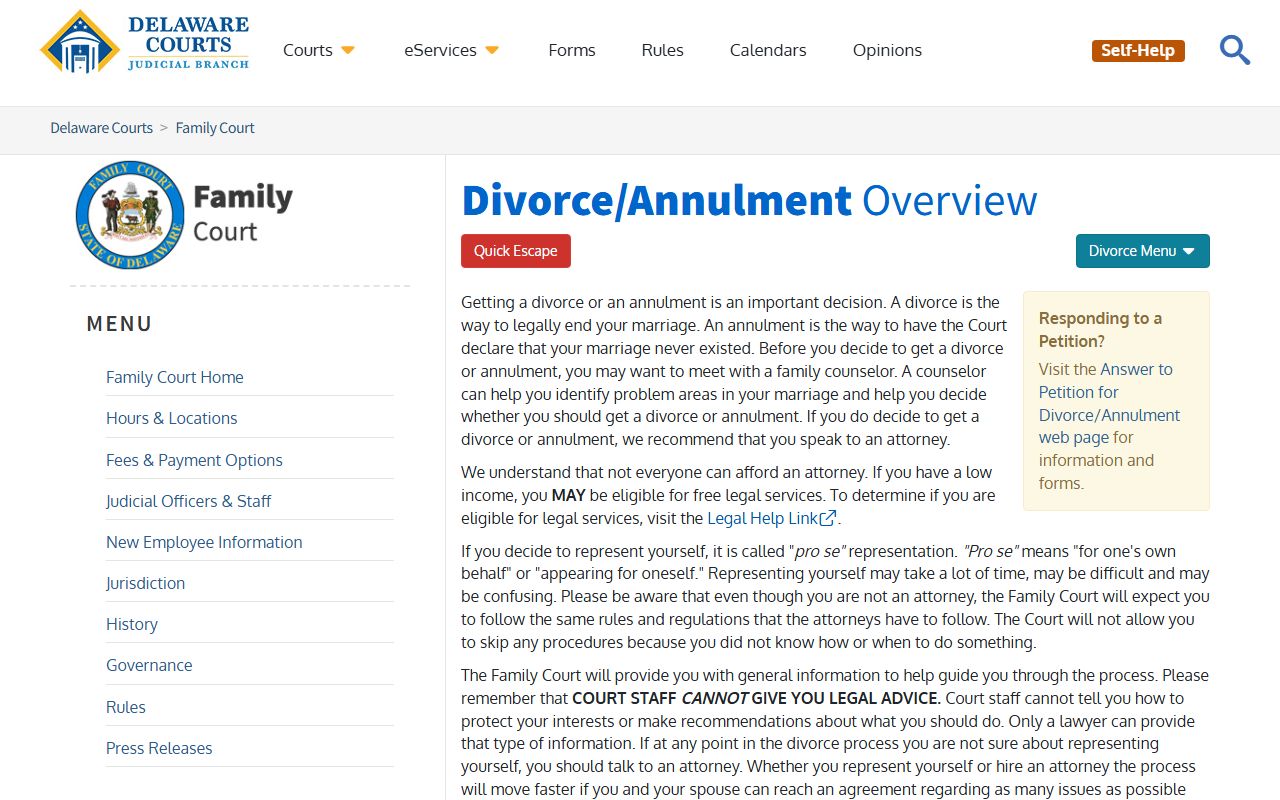
The Family Court site links to packets, forms, and the Records Department for each county. Visit courts.delaware.gov/family/divorce to read it direct from the court.
Note: Divorce decrees come from the Family Court, not from the Office of Vital Statistics. The state only holds an index.
How to Search Delaware Divorce Records
You have a few ways to search. In person is the fastest for full file access. Mail works when you cannot visit. Phone calls to the Records Department can tell you if a case is on file. Each Family Court office is open Monday through Friday, 8:30 a.m. to 4:30 p.m. Call first to book a time slot. Phone lines are (302) 255-0241 for New Castle, (302) 672-1045 for Kent, and (302) 855-7411 for Sussex.
For basic civil case info, Delaware runs CourtConnect, a free online docket search. CourtConnect covers Superior Court, Court of Common Pleas, and Justice of the Peace Courts. Family Court cases are not in the system. Divorce filings have to be checked in person at the Records Department. The state keeps Family Court cases offline for privacy.
The screenshot below shows the CourtConnect portal that runs the statewide civil docket search.
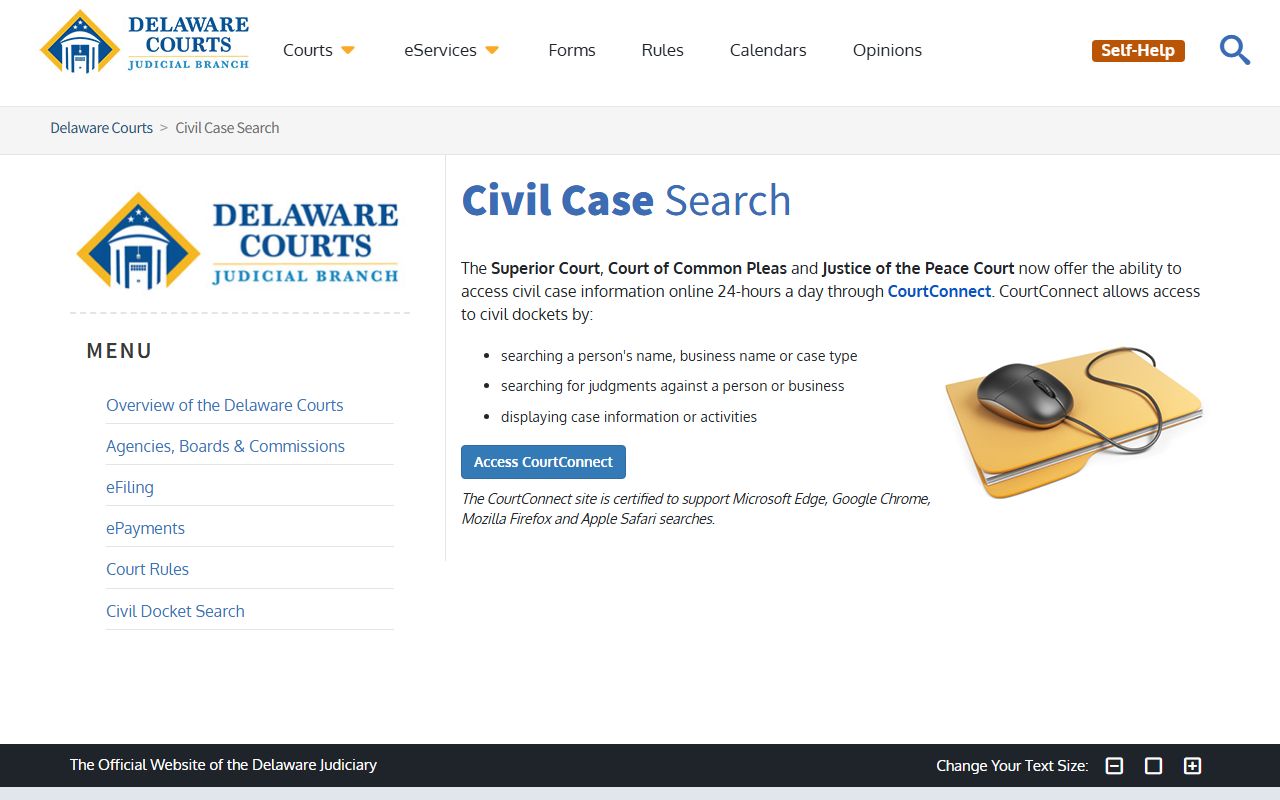
CourtConnect is free and open to the public. You can search by party name, case number, or judgment at courts.delaware.gov/docket.
To pull a divorce decree from the Family Court, bring or send:
- Full names of both parties to the marriage
- Date of the divorce or the year it was granted
- Case number if you know it
- Your name, date of birth, and a notarized signature
- Payment by check or money order made out to Family Court
The Records Department staff will pull the file and make copies while you wait. Mail requests take about 10 to 15 business days. Walk-ins get same-day help in most cases.
Delaware Divorce Decree Contents
A Delaware divorce decree lays out the end of the marriage in plain court language. Under Delaware Code Title 13 Section 1507, the petition lists the ages and addresses of both spouses, the date and place of the marriage, and any minor children. The decree closes the case and sets final terms.
Inside a typical Delaware divorce decree you find the case caption, case number, the judge's signature, and the court seal. The decree names both spouses. It lists the date of marriage and the date of separation. It states the grounds the court used to grant the divorce. Delaware is a pure no-fault state. The only ground is that the marriage is irretrievably broken.
When kids are part of the case, the decree also covers custody and support. It sets out legal and physical custody, visitation time, and child support under the Melson Formula. Delaware uses this formula to make sure each parent keeps enough income for basic needs before support is set. Property division is spelled out too. Delaware follows equitable distribution, so the court splits marital property fairly, not always evenly. The full code is at Title 13 Chapter 15.
The image below shows the Delaware Divorce Code page, which is the main source for the statute.
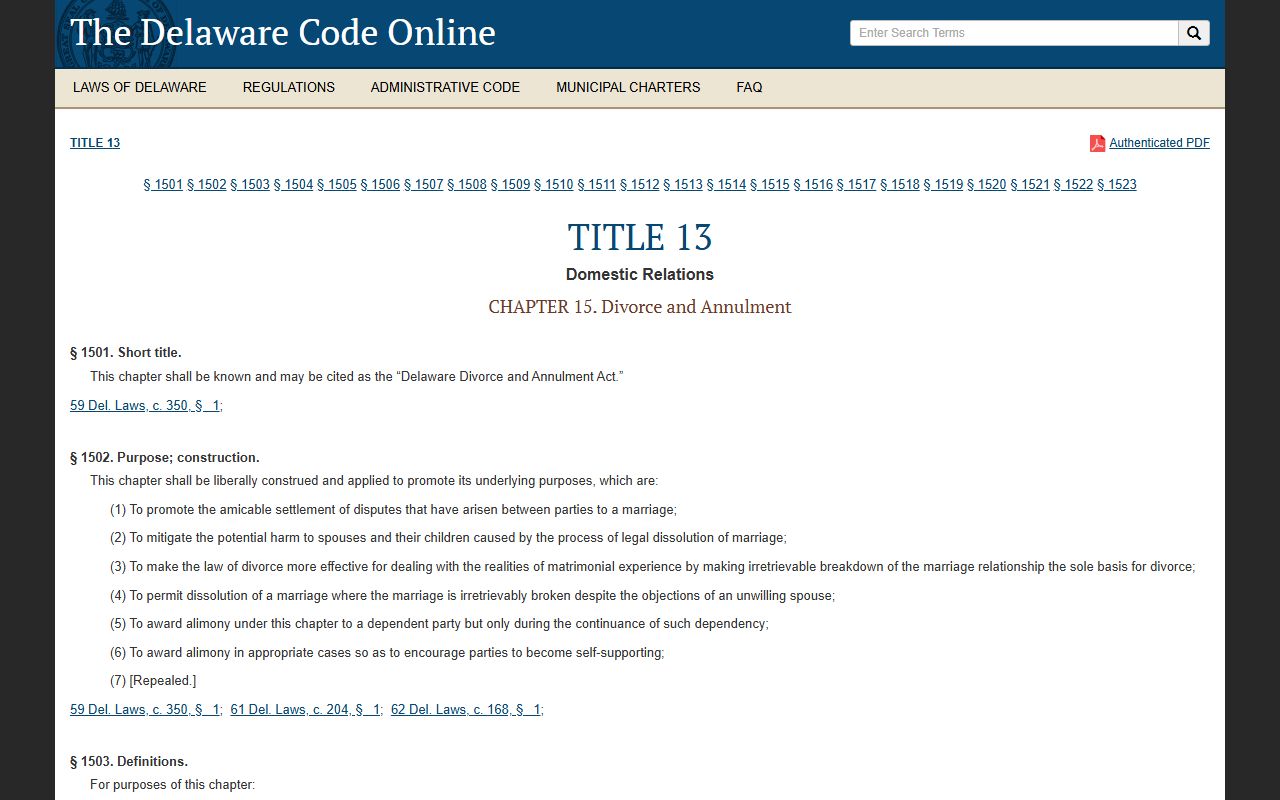
Title 13 Chapter 15 is known as the Delaware Divorce and Annulment Act. Read it at delcode.delaware.gov.
A full Delaware divorce case file can include these items:
- Petition for Divorce or Annulment (Form 442)
- Information Sheet (Form 240)
- Answer to Petition (Form 448)
- Financial Report forms and affidavits
- Separation Agreement
- Parenting Plan if children are part of the case
- Final Decree of Divorce
Getting a Copy of a Delaware Divorce Decree
A certified copy of a Delaware divorce decree costs $4.00. That same fee applies at all three county Family Courts. The court takes check or money order made out to Family Court. Cash may be taken at the counter but is not needed. Mail requests must include a notarized signature from the person asking for the record. Walk-in requests need a valid photo ID.
The Obtain Copies of Divorce or Annulment Decrees page lays out the steps. You send a written request to the Records Department in the county where the case was heard. Include full names of both parties, date of divorce, case number if known, your name, date of birth, and notarized signature. Payment goes with the letter.
The screenshot below is the decree copy page with the full instructions.
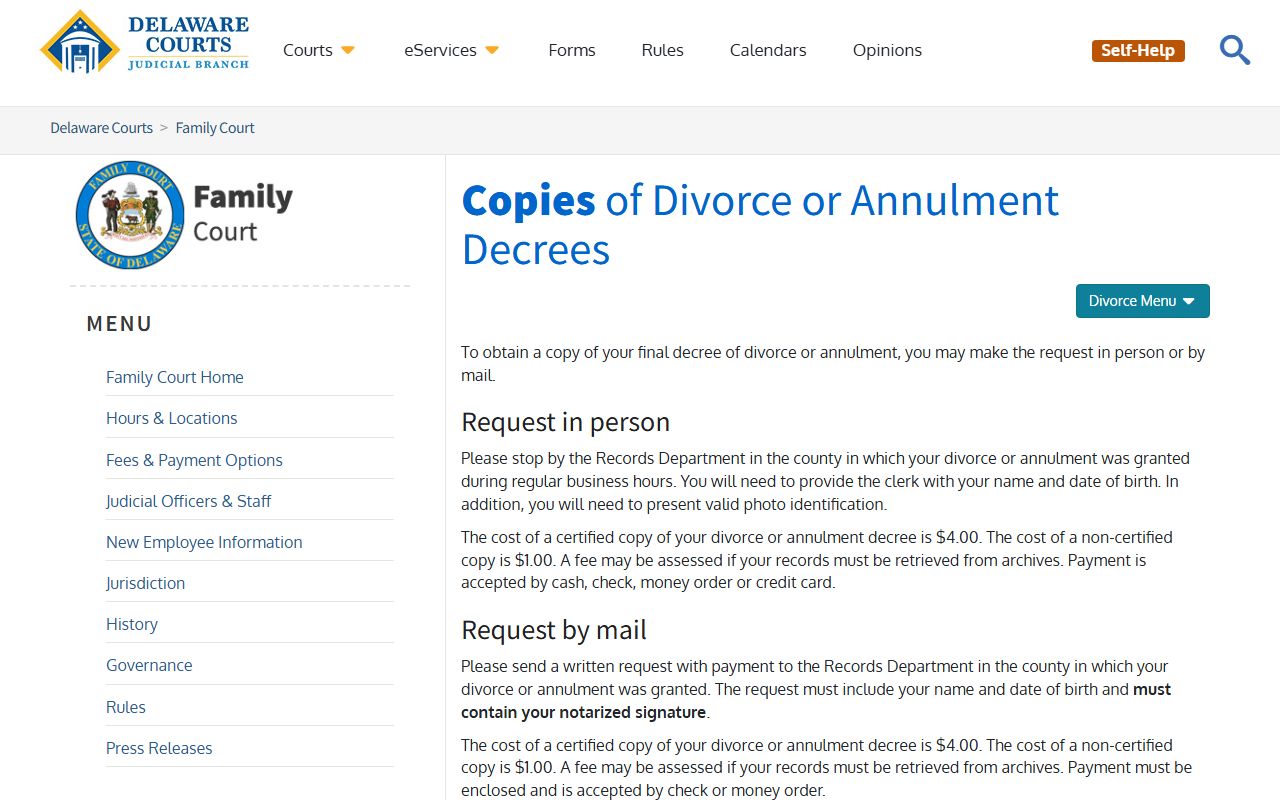
Read the steps direct at courts.delaware.gov/family/Divorce/decree_copies.
Mail takes 10 to 15 business days. In person, the Records Department can print and certify the decree the same day most of the time. Very old or sealed files can take longer. Walk-ins to Family Court should come in the morning when staff and lines are lighter. Plan to bring ID and be ready to sign at the counter.
For broader guidance on state-issued papers, the State Certificates Guide is a useful start. It notes that modern divorces come from the Family Court and that the Secretary of State can add an apostille if the decree will be used in another country.
The image below is the State Certificates Guide.
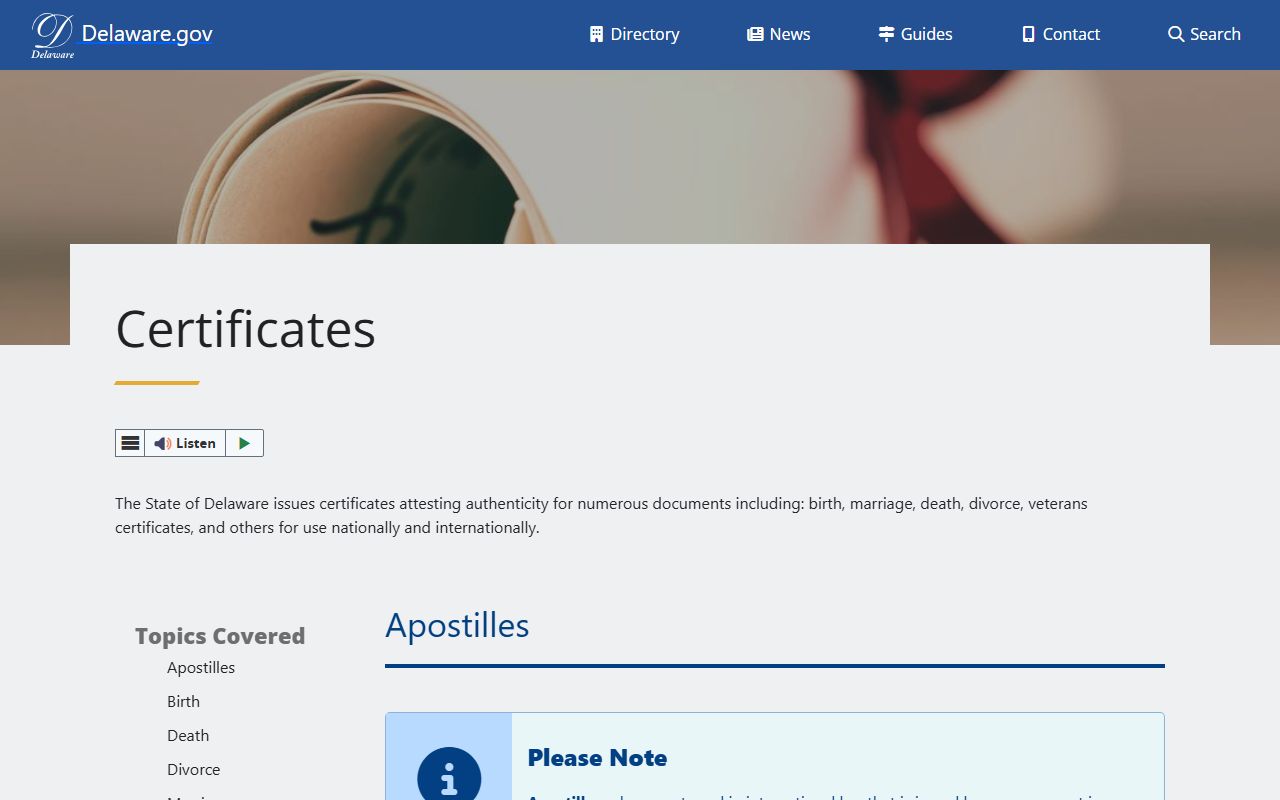
The guide links to the right office for each type of record at delaware.gov/guides/certificates.
Delaware Divorce Decree Forms
The Delaware courts post free divorce forms online. Anyone can print them and file without a lawyer. Forms are in PDF and come in English and Spanish. Some can be filled out on screen before you print. The set has Form 442 for the Petition, Form 240 for the Information Sheet, Form 448 for the Answer, Form 279 for children's rights, and separate pages for financial reports.
The image below is the Court Forms Download page.
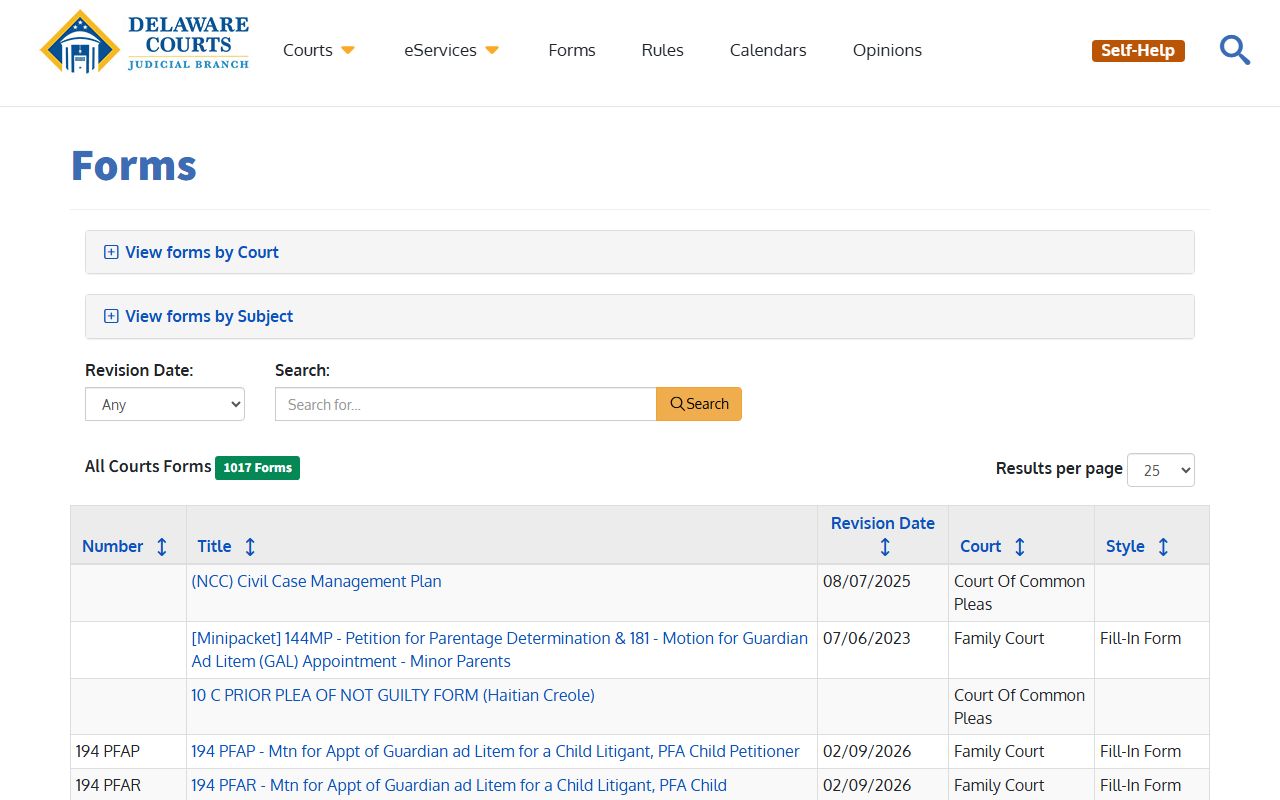
Get all the Family Court forms at courts.delaware.gov/forms.
You file the original plus one copy of each form at the Family Court counter or by mail. Staff cannot give legal help. Each Resource Center in the three counties has self-help computers, form packets, and printed step-by-step guides for pro se filers. The Resource Center in New Castle County sits at 500 N. King Street in Wilmington. Kent County's is at 400 Court Street in Dover. Sussex County's is at 22 The Circle in Georgetown.
Grounds and Residency for Delaware Divorce
Delaware is a pure no-fault state. Under Section 1505 of Title 13, the only ground for divorce is that the marriage is irretrievably broken and reconciliation is not likely. Four bases prove the break. First is voluntary separation of at least six months. Second is misconduct, which covers adultery, abuse, desertion, or substance abuse. Third is incompatibility. Fourth is a spouse's serious mental illness.
For separation-based cases, the parties must live apart for six months before the court will grant the divorce. No separation time is required when the petition is based on misconduct or incompatibility. Proof of misconduct must be filed with the court and can include records, witnesses, or sworn statements from either party.
Residency is set by Section 1504 of Title 13. At least one spouse must have been a Delaware resident for six months before the court rules on the petition. You can file earlier, but the ruling waits for the six-month mark. For same-gender civil unions entered in Delaware, residency is not needed if neither spouse lives in-state. The court has jurisdiction because the union was entered here.
Under Section 1509, an automatic restraining order starts the moment a divorce petition is filed. Both parties are blocked from hiding or moving money or assets except for normal bills and business. The petitioner is bound at filing. The respondent is bound at service. The order stays in place until the case ends.
Historical Delaware Divorce Records
Divorces granted before 1976 in Delaware are not at the Family Court. The Prothonotary at the county Superior Court holds those files for most of the twentieth century. The Delaware Public Archives in Dover holds the oldest files and index material. Kent County records go back to the county's formation in 1683, which makes the Archives a prime site for deep genealogy work.
The Archives charges $0.50 per page for staff-made copies. A certified divorce decree from the historical set is $10.00. Research room hours run Monday through Friday, 8:00 a.m. to 4:15 p.m. Staff can pull a case if you have the year and the names. Email and mail orders are also open, with tiered pricing based on how many pages you need.
The image below is the Delaware Public Archives FAQ page, which lists the full request steps for historical divorce records.
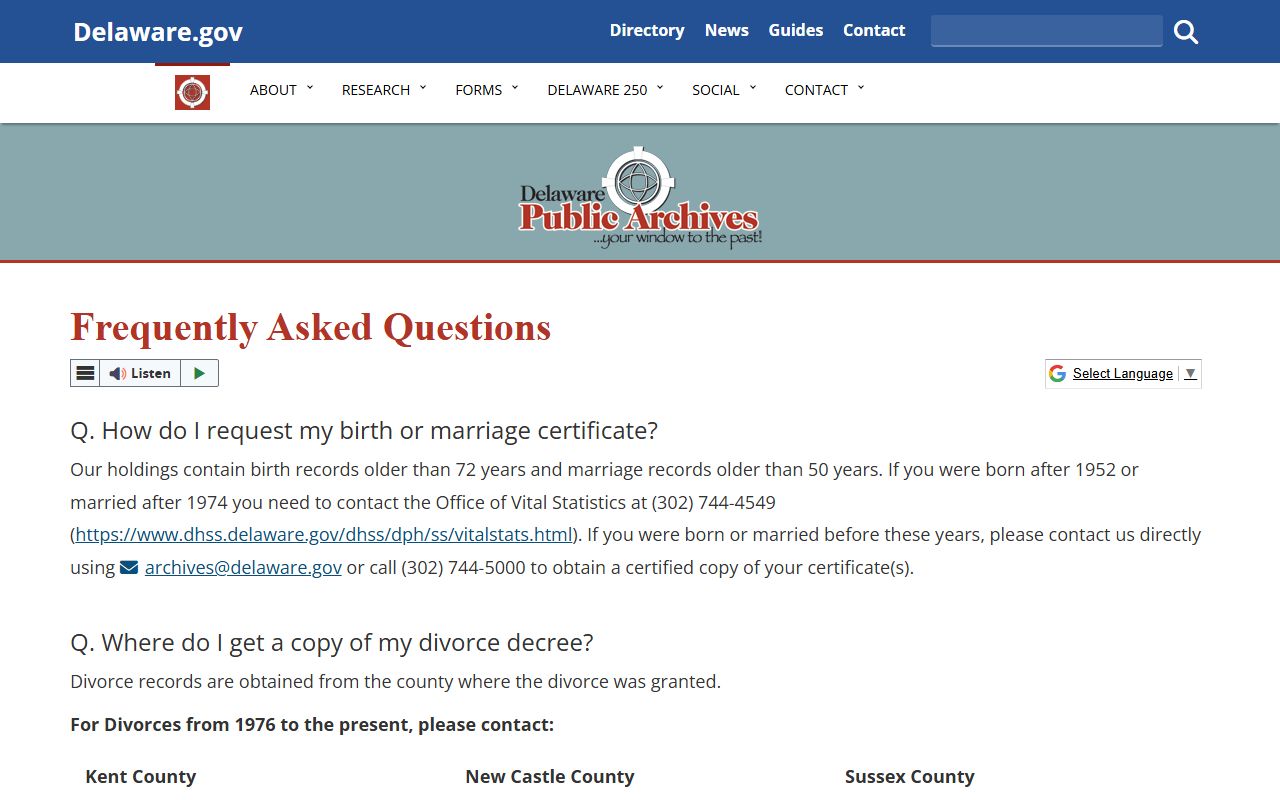
The FAQ and address are at archives.delaware.gov/faqs.
Note: Bring a year and both party names when you call the Archives. The older the file, the longer the search takes at the counter.
Public Access to Delaware Divorce Decrees
Basic divorce case info is open to the public in Delaware. Case numbers, party names, filing dates, and the final decree are records anyone can ask for. Social documents like financial affidavits and detailed asset statements are not open. A court order is needed to see those. Records of children, including custody evaluations, are protected too. Section 1513 of Title 13 covers property division and also shapes what stays open to the public.
The image below is the Family Court Records Access Policy page.
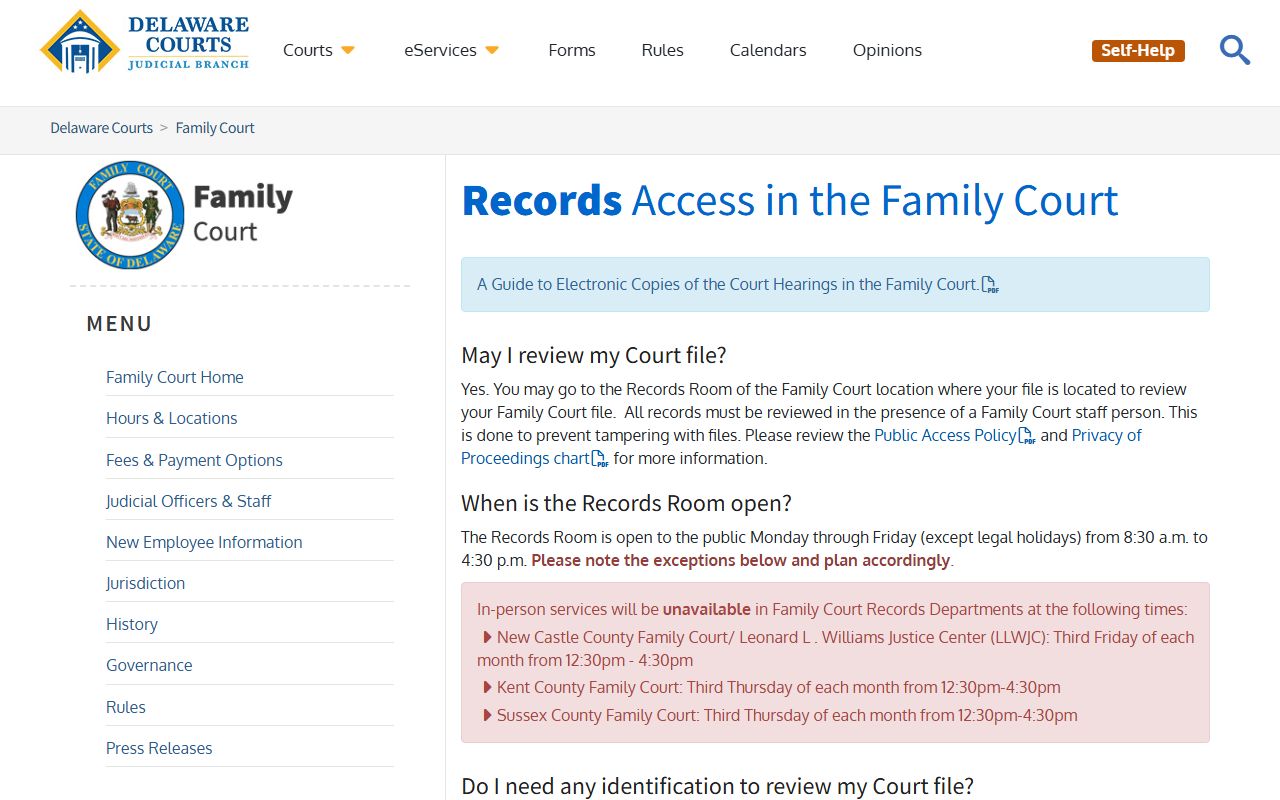
The full policy is at courts.delaware.gov/family/fcrecordaccess.
The Records Room in each county is open to the public from 8:30 a.m. to 4:30 p.m. on weekdays. Call ahead to set a time if you plan to review a large file. Staff can point you to the right case but cannot give legal advice. They can copy papers and certify them on the spot. Some files are in storage and need more notice.
State Index and Vital Statistics
The Office of Vital Statistics keeps an index of Delaware divorces from 1935 to now. The main office is at 417 Federal Street in Dover, and a branch sits at 258 Chapman Road in Newark. The unit does not send out the full decree. It only confirms the divorce happened and gives the county and date. For the actual record, you still have to go to the Family Court in the county where the divorce was granted.
The screenshot below is the Office of Vital Statistics page.
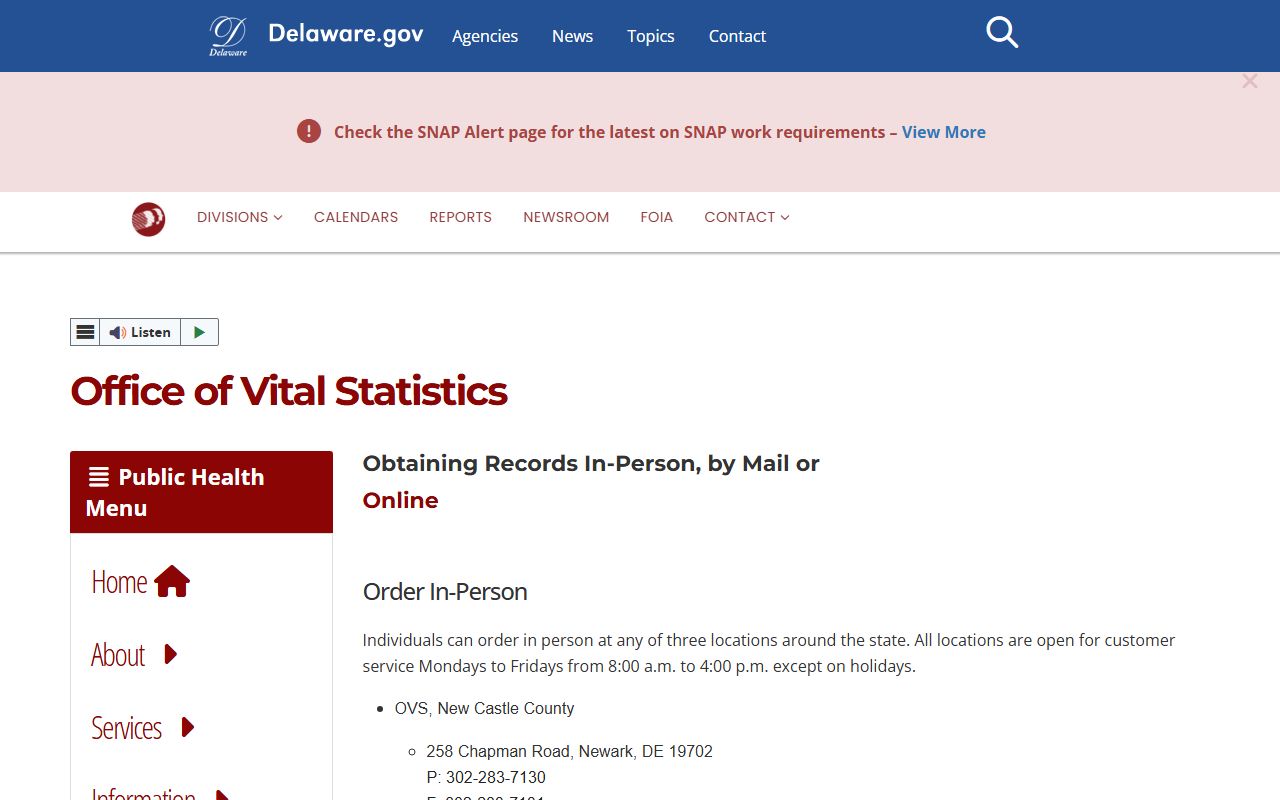
The page notes that vital records are confidential per state law and are only released to the person or close kin. Call (302) 744-4549 or check dhss.delaware.gov/dhss/dph/ss/vitalstats for the latest forms.
Delaware Courts Administration
The Administrative Office of the Courts runs the whole court system. It posts rules, sets policy, and keeps the forms library current. The AOC also handles the Kent County Courthouse in Dover, which hosts the Superior Court, Court of Common Pleas, Justice of the Peace Court 16, and the Law Library on a 5.3-acre site.
The image below is the Delaware Courts Administration page.
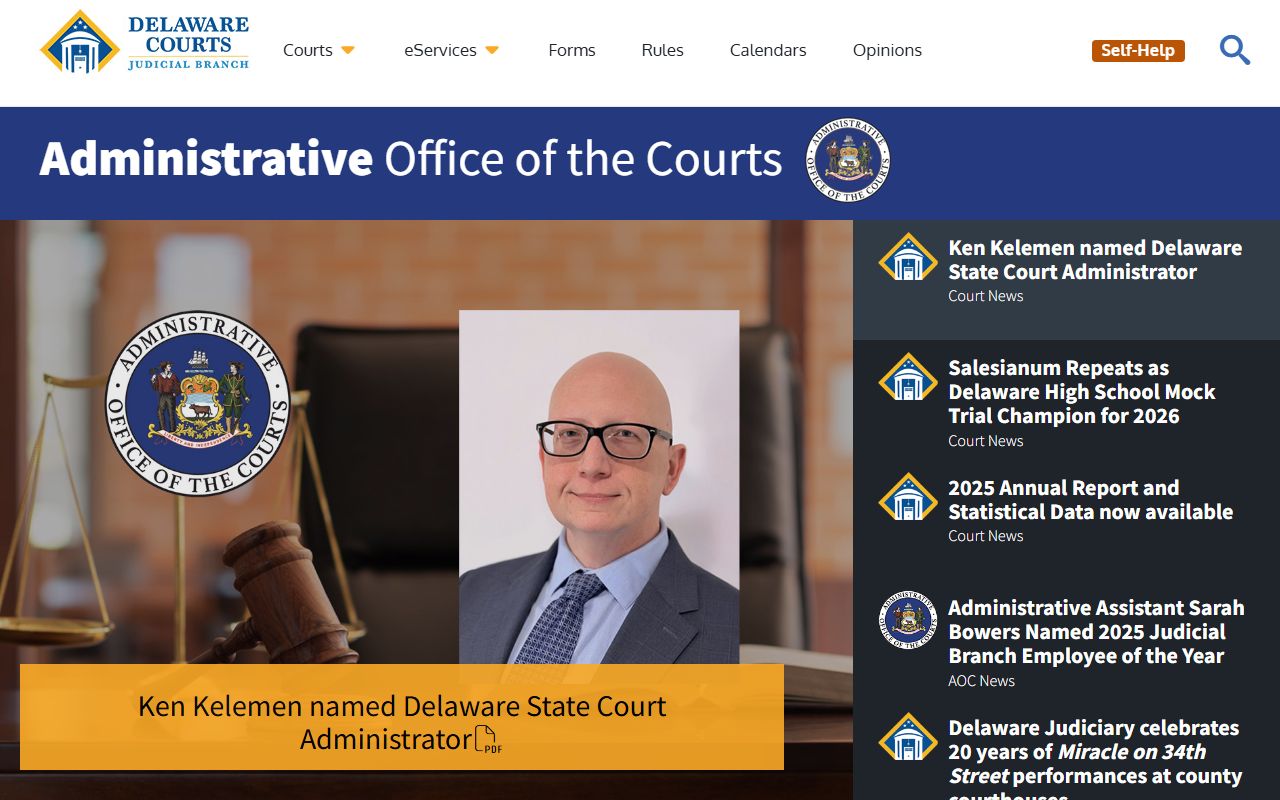
Read more about the state court system at courts.delaware.gov/aoc.
The image below shows the Kent County Courthouse info page.
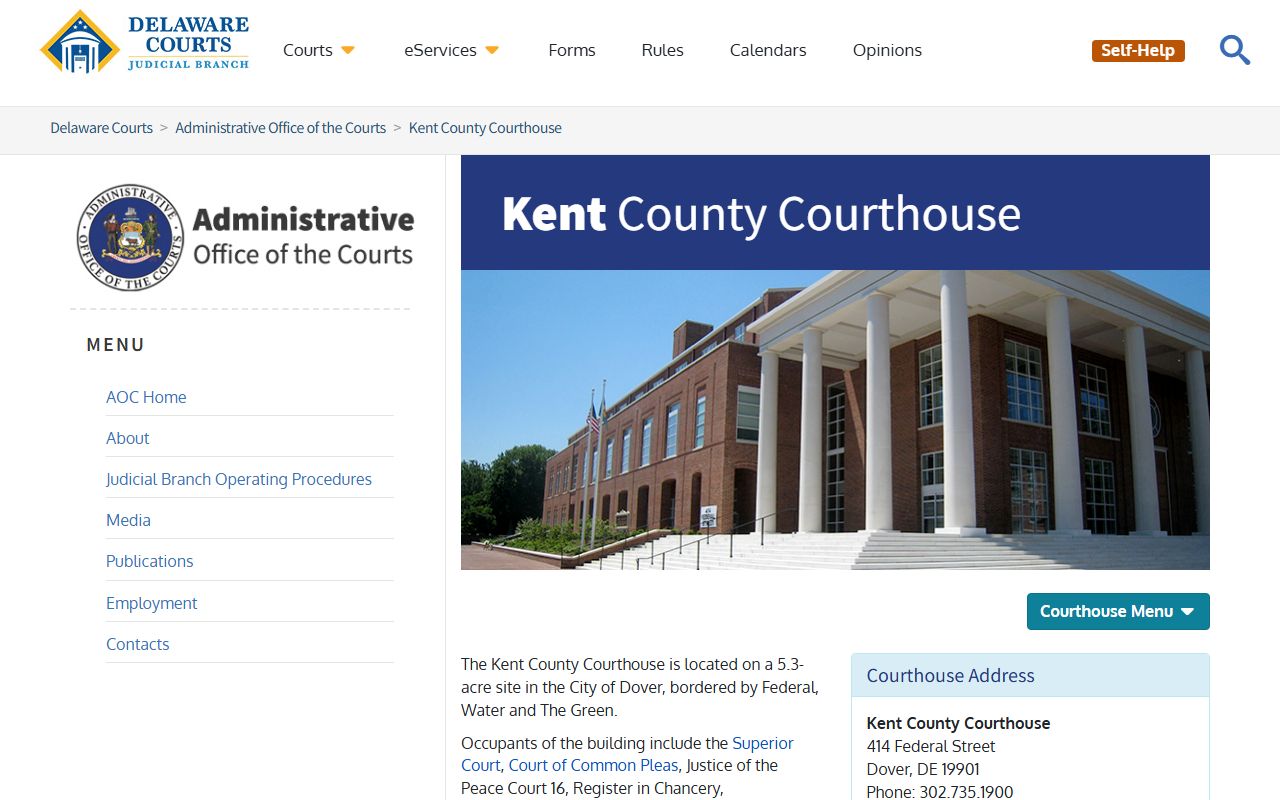
See the full list of courts and offices housed at the Kent County Courthouse at courts.delaware.gov/aoc/kccourthouse.
Legal Help for Delaware Divorce Decree Cases
Free legal help is on hand for those who cannot afford a lawyer. Delaware Volunteer Legal Services at 601 N. Market Street in Wilmington takes family law cases from low-income residents. The phone is (302) 478-8680. Intake is based on income and case type. Priority goes to cases with domestic violence, child custody, or safety issues. DVLS uses volunteer attorneys to give advice and some court time.
The Delaware Law School Legal Aid Clinic at 4601 Concord Pike in Wilmington uses law students under attorney supervision to help with family law. The clinic's phone is (302) 477-2100. Services can include form help, procedural guidance, and some court work. The Delaware Legal Help Link, a state-run referral site, connects filers to aid groups and pro bono lawyers.
Every county Resource Center has free form packets and self-help computers. The New Castle County Public Law Library sits on the 13th floor at 500 N. King Street, Suite 1301, in Wilmington. Phone is (302) 255-0900. Staff can show you where the forms and code books sit, but they cannot give advice. Parent Education Class is needed when minor children are part of the case. The class is four hours and costs up to $100 per parent by statute.
Browse Delaware Divorce Records by County
Each of Delaware's three counties handles divorce filings at its own Family Court. Pick a county below to see the local office, address, and phone number.
Delaware Divorce Records by City
Find the right Family Court for your city. The list below covers the main cities and towns served by New Castle, Kent, and Sussex County Family Courts.